



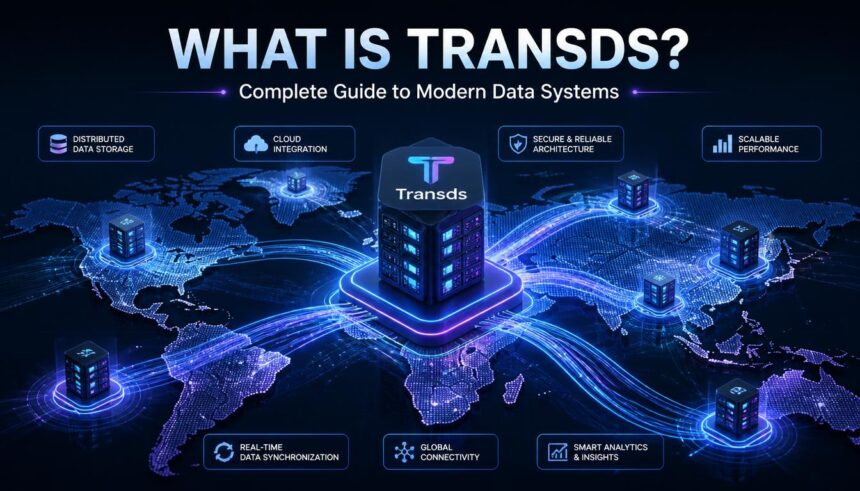
In today’s digital world, data is everything. Every app you use, every website you visit, and every online service you interact with is built on top of complex data systems working quietly in the background. Now, in this growing ecosystem, a term like Transds has started to appear more often, especially in discussions around modern data architecture and distributed computing.
At first glance, Transds might look like just another technical buzzword, but it actually represents a much broader idea related to how data is processed, transformed, and moved across systems. Whether you’re a student, a developer, or someone simply curious about modern technology trends, understanding Transds can give you a clearer picture of how today’s digital systems operate behind the scenes.
Understanding Transds in Simple Terms
Transds is generally used to describe a modern approach to data systems where information is not just stored, but actively transformed and managed across distributed environments. Instead of relying on a single central system, Transds focuses on spreading data processing across multiple nodes or systems, making everything faster and more scalable.
To put it simply, think of Transds like a smart network of workers in different locations. Instead of one person doing all the work, tasks are divided among many people who work at the same time. This is exactly how Transds-style systems handle data—by splitting, processing, and recombining it efficiently.
In real-world usage, Transds is often connected with distributed computing, cloud systems, and modern data pipelines. Companies dealing with large-scale applications use similar concepts to ensure their platforms stay fast even when millions of users are active at the same time.
Why Transds Matters in Modern Technology
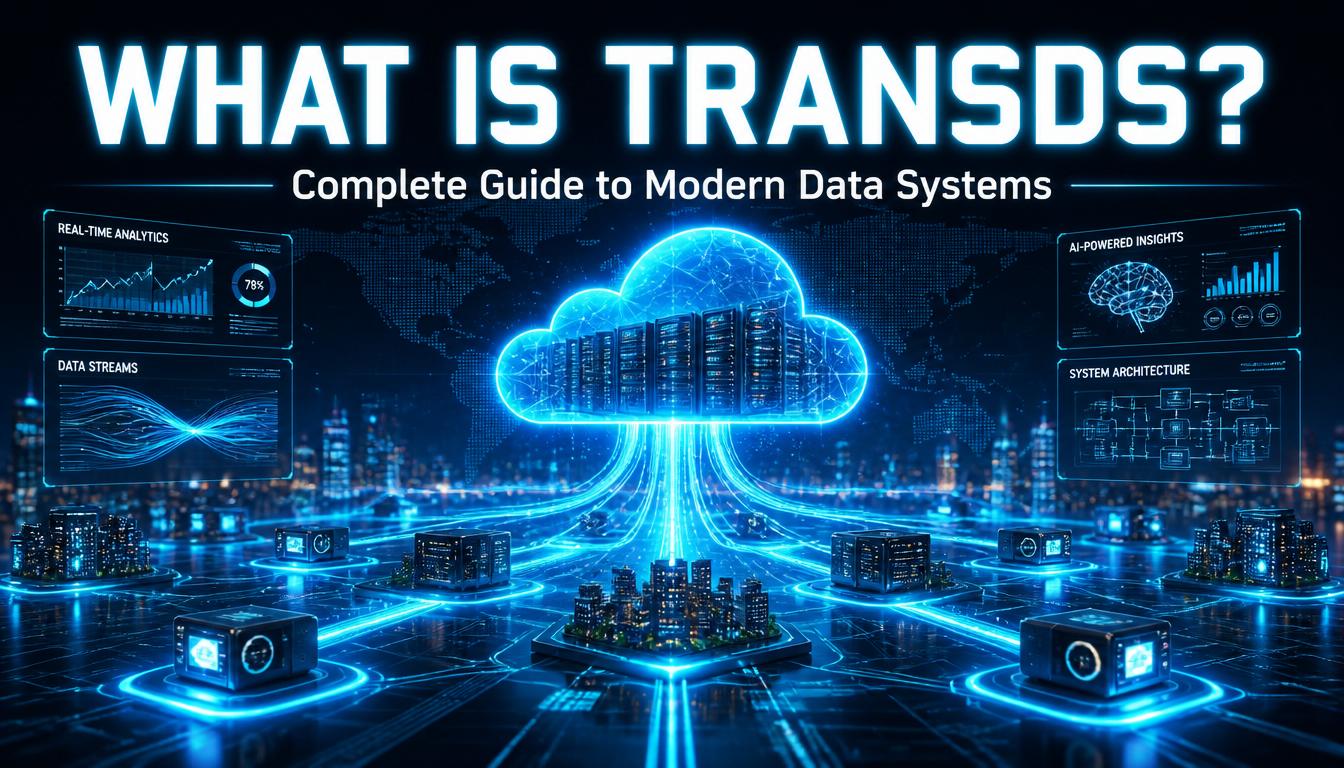
The importance of Transds becomes clearer when you look at how much data is generated every second. Social media platforms, online banking systems, e-commerce websites, and streaming services all depend on real-time data processing. Without systems like Transds, handling this massive flow of information would be nearly impossible.
Another reason Transds is important is its ability to improve efficiency. Traditional systems often struggle when data loads increase, leading to slow performance or crashes. Transds-based systems solve this by distributing the workload, which keeps everything running smoothly even under heavy demand.
In today’s competitive digital environment, speed and reliability are everything. Whether it’s delivering search results instantly or processing financial transactions in milliseconds, Transds-like systems help businesses stay ahead.
How Transds Works Behind the Scenes
At its core, Transds works by breaking down large data tasks into smaller parts. These parts are then processed simultaneously across different servers or systems. Once the processing is complete, the results are combined into a final output that users can see or use.
This approach is especially useful in cloud computing environments where resources are spread across different regions. Instead of relying on a single machine, Transds allows systems to scale dynamically depending on demand. This means if traffic increases, more resources can be automatically added to handle the load.
Another important aspect is data transformation. In Transds-style systems, data is not only moved around but also cleaned, filtered, and optimized during processing. This ensures that the final output is accurate, structured, and ready for use in applications or analytics.
Real-World Applications of Transds
Transds concepts are widely used in industries that rely heavily on data. For example, in e-commerce platforms, every product search, recommendation, and checkout process depends on fast data processing. Systems inspired by Transds ensure that users get instant results without delays.
In the financial sector, banks and trading platforms use similar distributed data systems to process thousands of transactions per second. Even a small delay can lead to serious issues, so efficient data handling becomes extremely important.
Social media platforms also rely heavily on Transds-like architecture. Every time you scroll, like, or comment, data is being processed in real time across multiple servers. Without this system, platforms like Instagram, TikTok, or Facebook would not be able to handle billions of interactions daily.
Benefits of Using Transds in Data Systems
One of the biggest advantages of Transds is scalability. As data grows, the system can expand without breaking or slowing down. This makes it ideal for startups and large enterprises alike who expect rapid growth.
Another major benefit is reliability. Since data is distributed across multiple systems, even if one part fails, the rest of the system continues to function. This reduces downtime and improves user experience significantly.
Transds also improves processing speed. By dividing tasks into smaller chunks and handling them simultaneously, systems can deliver results much faster than traditional methods. This is especially important for real-time applications like live streaming or online gaming.
Challenges and Limitations of Transds
Even though Transds offers many advantages, it is not without challenges. One of the main difficulties is system complexity. Managing distributed systems requires advanced technical knowledge and careful planning to avoid errors or data inconsistencies.
Another challenge is security. When data is spread across multiple systems, protecting it becomes more complicated. Developers need to ensure that every node in the system is secure and properly encrypted to prevent breaches.
There is also the issue of cost. Building and maintaining distributed systems based on Transds concepts can be expensive, especially for smaller companies or startups that have limited resources.
Future of Transds in 2026 and Beyond
As technology continues to evolve, Transds-like systems are expected to become even more advanced. With the rise of artificial intelligence, machine learning, and edge computing, data systems are becoming more intelligent and decentralized.
In the future, we may see Transds integrated with AI-driven automation, where systems not only process data but also make decisions in real time. This could revolutionize industries like healthcare, finance, and logistics.
Another expected trend is the expansion of edge computing, where data is processed closer to the user instead of centralized servers. This will reduce latency and make systems even faster and more efficient, further enhancing the role of Transds-style architectures.
Conclusion
Transds represents a modern way of thinking about data systems, where speed, scalability, and distributed processing play a central role. It is not just a single technology but a concept that reflects how today’s digital infrastructure is evolving. As data continues to grow, systems like Transds will become even more important in shaping the future of technology and innovation.
FAQs
What is Transds in simple words?
Transds is a modern concept in data systems where information is processed, transformed, and managed across multiple connected systems instead of just one central server.
Is Transds a software or a technology?
Transds is not a single software. It is more of a data system approach or concept used in distributed computing and modern cloud-based architectures.
Why is Transds important in modern technology?
Transds is important because it helps systems handle large amounts of data quickly and efficiently by distributing the workload across multiple servers.
Where is Transds used in real life?
It is commonly used in e-commerce platforms, banking systems, social media apps, and any service that processes large-scale real-time data.
What is the future of Transds?
The future of Transds is linked with AI, cloud computing, and edge computing, where systems will become faster, smarter, and more automated in handling data.