



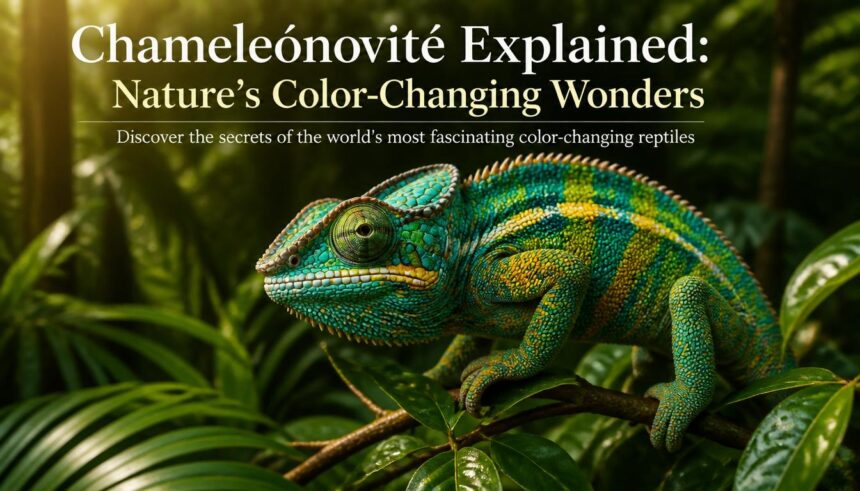
When people first hear the word Chameleónovité, they usually imagine a small lizard quietly sitting on a branch and suddenly changing its color like magic. It almost feels unreal, like something from a fantasy movie rather than a real animal living on Earth. But the truth is even more interesting than fiction. These creatures are real, highly specialized reptiles that have evolved some of the most unique biological abilities in the animal kingdom.
- What Are Chameleónovité Really?
- The Science Behind Their Color Change
- Eyes That See the World in Two Directions
- The Incredible Tongue Mechanism
- Natural Habitat and Where They Live
- Behavior and Communication Style
- Diet and Hunting Strategy
- Reproduction and Life Cycle
- Survival Strategies and Adaptation Skills
- Chameleónovité and Humans
Chameleónovité are not just about color change. They represent a complete survival system built through millions of years of evolution. From their eyes that move independently to their lightning-fast tongues and tree-dwelling lifestyle, everything about them is designed for precision, patience, and survival. In this article, we will explore their hidden world in a simple and natural way so you can truly understand why they are considered one of nature’s most fascinating creations.
What Are Chameleónovité Really?
Chameleónovité are a family of reptiles known scientifically for their highly specialized structure and behavior. They are mostly found in warm regions like Africa, Madagascar, parts of Europe, and Asia. These reptiles are part of a larger group of lizards, but they stand out because of their unusual body design and survival techniques.
Unlike ordinary lizards that move quickly on the ground, Chameleónovité prefer a slow and controlled lifestyle in trees. Their entire body is adapted for climbing, balancing, and blending into their surroundings. Even their feet are shaped in a way that helps them grip branches like natural hooks, giving them strong control over tree surfaces.
What makes them even more interesting is how perfectly everything in their body works together. Their slow movements, unique skin, and specialized senses are not random traits. Instead, they form a complete system that helps them survive in environments where both predators and prey are constantly alert.
The Science Behind Their Color Change
One of the biggest myths about Chameleónovité is that they change color only to match their surroundings. In reality, their color-changing ability is much more complex and is mainly linked to communication, temperature control, and emotional response.
Their skin contains special cells that can reflect light in different ways. When these cells shift, the visible color of the skin changes. This is not just about camouflage but also about expressing mood. For example, a chameleon may become darker when stressed or brighter when trying to attract a mate or show dominance.
This color change is also influenced by environmental conditions. If the temperature is too hot or too cold, their body adjusts pigmentation to help regulate internal heat. This makes their skin not just a protective layer but an active part of their survival system. It’s like having a built-in emotional and environmental display.
Eyes That See the World in Two Directions
The eyes of Chameleónovité are one of their most powerful survival tools. Each eye can move independently, meaning they can look in two different directions at the same time. This gives them a nearly complete panoramic view of their surroundings without moving their body.
This ability helps them stay alert for both predators and prey. While one eye might focus on spotting insects, the other can scan for danger. This dual vision system makes them extremely aware of everything happening around them, even in dense forest environments.
When they decide to focus on something specific, both eyes can lock in on the same target. This creates precise depth perception, which is extremely important when they are preparing to shoot their tongue at prey. It is a perfect balance between awareness and accuracy.
The Incredible Tongue Mechanism
One of the most fascinating features of Chameleónovité is their tongue. It is not just long, but extremely fast and powerful. In fact, their tongue can extend faster than the human eye can follow, allowing them to catch insects in a fraction of a second.
The tongue works like a biological projectile. It is attached to strong muscles and a specialized bone structure that stores energy. When released, it shoots forward with incredible speed and accuracy, grabbing prey with a sticky tip designed to hold insects firmly.
What makes this system even more impressive is how energy-efficient it is. Chameleons do not need to chase their food. Instead, they wait patiently, aim carefully, and strike instantly. This hunting method reduces energy loss and makes them highly effective predators in their ecosystem.
Natural Habitat and Where They Live
Chameleónovité are mostly found in warm climates where trees and vegetation are abundant. Forests, jungles, and bushy areas provide them with the perfect environment to survive. Their entire lifestyle depends on trees because that is where they hunt, hide, and rest.
Their ability to blend into branches and leaves gives them a major advantage in such environments. Predators often fail to spot them, and their prey rarely notices them until it is too late. This natural camouflage system is one of the key reasons they have survived for so long in the wild.
Different species of Chameleónovité have adapted to different regions. Some prefer humid tropical forests, while others can survive in dry and semi-desert environments. This adaptability shows how flexible and diverse this family of reptiles really is.
Behavior and Communication Style
Chameleónovité are generally calm and solitary creatures. They do not move around in groups and prefer to stay alone in their own territory. This behavior helps reduce competition and allows them to focus on survival without unnecessary conflict.
Their communication is mostly visual. Instead of sounds or physical contact, they rely heavily on color changes and body posture. A slight color shift can signal aggression, fear, or readiness to mate. This silent communication system is both subtle and highly effective.
Even their movements are part of communication. Slow, deliberate motions often indicate calm behavior, while rapid changes can signal stress or alertness. Everything they do has meaning, making them one of the most expressive reptiles in nature without using any voice.
Diet and Hunting Strategy
The diet of Chameleónovité mainly consists of insects like flies, crickets, and small invertebrates. They are not active hunters in the traditional sense. Instead, they rely on patience and precision.
They often remain completely still for long periods, blending into their surroundings until prey comes close. Once the target is within range, they launch their tongue with extreme speed and accuracy. This method allows them to conserve energy while still feeding efficiently.
Their hunting strategy is a perfect example of patience in nature. Instead of chasing food, they let food come to them. This makes them highly efficient predators despite their slow and calm appearance.
Reproduction and Life Cycle
The reproduction process of Chameleónovité varies depending on the species. Some lay eggs, while others give birth to live young. This variation shows how diverse this family is within the reptile world.
During mating season, males often display bright and intense colors to attract females or compete with other males. These color displays are not random; they are part of a complex selection process where strength, health, and dominance are communicated visually.
Once the young are born or hatched, they are independent almost immediately. There is very little parental care involved. The young chameleons must rely on their instincts and natural abilities from the very beginning of their lives.
Survival Strategies and Adaptation Skills
Survival for Chameleónovité depends on a combination of camouflage, patience, and sensory awareness. Their ability to blend into their surroundings helps them avoid predators, while their vision and tongue help them capture food efficiently.
They are also highly adaptable creatures. Depending on their environment, they can adjust their behavior, color patterns, and hunting strategies. This flexibility allows them to survive in different climates and conditions across the world.
Over time, these adaptations have made Chameleónovité one of the most successful reptile families in terms of specialized survival techniques. Every feature they have is directly linked to improving their chances of survival in the wild.
Chameleónovité and Humans
Humans have always been fascinated by Chameleónovité. Their ability to change color and their unusual appearance make them popular in documentaries, zoos, and even as exotic pets in some regions.
However, keeping them in captivity is not simple. They require very specific environments, including humidity, temperature control, and a natural diet. Without proper care, they can easily become stressed or unhealthy, which shows how delicate their natural balance really is.
In conservation terms, many species of Chameleónovité face threats due to habitat destruction. As forests disappear, their natural homes are shrinking, making conservation efforts increasingly important for their survival in the future.
Conclusion
Chameleónovité are far more than just color-changing reptiles. They are highly advanced survivors shaped by nature to thrive in complex environments. Every part of their body, from their eyes to their tongue and skin, works together in a perfectly balanced system.
Understanding them gives us a deeper appreciation of how intelligent and adaptable nature can be. They remind us that survival is not always about strength or speed, but sometimes about patience, precision, and the ability to adapt quietly to the world around you.
FAQs
What are Chameleónovité?
Chameleónovité are a family of specialized reptiles known for their unique ability to change skin color, independently moving eyes, and long, projectile tongues. They mainly live in trees and are found in warm regions like Africa and Madagascar.
Why do Chameleónovité change their color?
They don’t change color only for camouflage. Their color change is mostly used for communication, showing emotions like stress or excitement, attracting mates, and regulating body temperature depending on environmental conditions.
Can Chameleónovité see in two directions at once?
Yes, their eyes move independently, allowing them to look in two different directions simultaneously. This helps them watch for predators and hunt prey at the same time with great accuracy.
What do Chameleónovité eat?
They mainly eat insects such as flies, crickets, and other small invertebrates. They catch their prey using a fast, sticky tongue that can shoot out in a fraction of a second.
Are Chameleónovité good pets?
They can be kept as exotic pets, but they require very specific care, including proper temperature, humidity, lighting, and diet. Without the right setup, they can easily become stressed and unhealthy.